

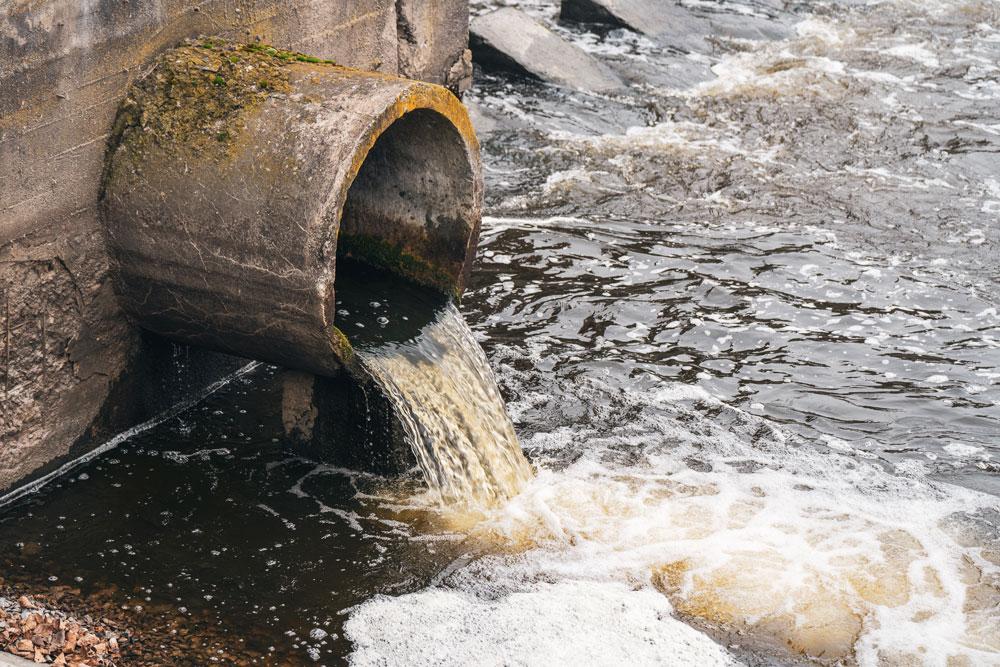
The Environment Agency is set to gain strengthened powers over water companies that break environmental rules.
As part of reforms, water companies that flout rules face penalties of up to £500,000.
Previously, the regulator faced limitations in its ability to impose financial penalties for frequent, minor and moderate offending – such as breaches of a licence or permit, because it needed to prove an offence to the same high legal standard used in criminal courts. This made it too expensive and time-consuming to pursue.
Now, the regulator will be able to use the lower civil standard of proof.
A £500,000 cap will be introduced to variable monetary penalties that are proved to the civil standard of proof.
There will also be the introduction of new automatic penalties for clearly defined breaches. This would involve a £10,000 payment, which would double if the company failed to pay within 28 days.
These changes are in addition to other enforcement tools, including unlimited financial penalties, where offending is proved to a criminal standard.
Criminal prosecution will still be an option for the most serious offences.
The size of the penalty will be dependent upon the size of the water company, so that companies don't just see them as a cost of doing business.
Environment Secretary Emma Reynolds said: "This government has been clear that polluting water companies and bosses will face the consequences of their actions. The introduction of automatic penalties will give the Environment Agency the teeth it needs to deliver cleaner rivers, lakes and seas.
"This is just one of the actions we’re taking to clamp down on water companies including the introduction of a more powerful water regulator, no-notice inspections, MOT-style checks of water company assets and banning bonuses for polluting bosses."
Environment Agency Chair, Alan Lovell, said: "We care deeply about protecting our waterways and welcome measures that will deter pollution incidents and other harmful permit breaches.
"These changes complement our current enforcement powers, including criminal prosecution, and will further our aim of delivering quick and proportionate punishment where failures happen.
"We now have more people, better data and increased powers to drive better company performance and achieve a cleaner water environment for us all."