£11 million for conservation projects in Wales
Welsh minister for climate change Julie James has announced £11 million of funding to curb the decline of wildlife in Wales.
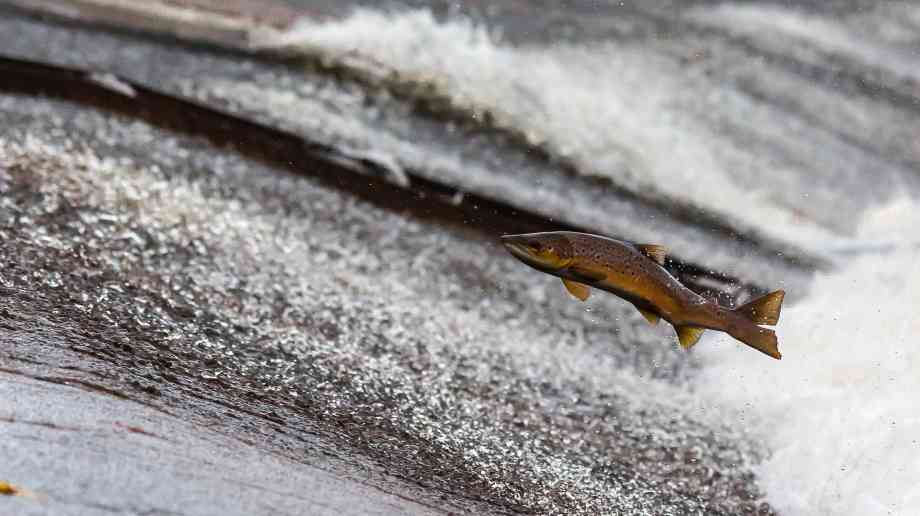
The announcement came as the minister met with scientists working to save the Atlantic wild salmon, which experts say could disappear from Welsh rivers within the next twenty years.
Nine large and 17 medium projects are set to benefit from the latest round of Nature Networks funding, which intends to strengthen the resilience of Wales’ seas, forests and disappearing grasslands. The locations are home to some of Wales’ most iconic species, including the curlew, otter and bottlenose dolphin.
Over years, roads, development and farmland have left animals and plants stranded on unconnected ‘islands’, blocking migration routes and thus decreasing the gene pool and health of animal and plant populations.
The Welsh Government set up the Nature Networks Programme to build ‘wildlife corridors’ throughout Wales.
‘Reconnecting the Salmon rivers of Wales’, which is led by Swansea University has received more than £600k from the first round of the Nature Network Fund, which awarded £7m to 29 projects.
The project aims to remove physical barriers that have blocked migration routes for wild Atlantic salmon and other species in the West Cleddau, EastCleddau, Usk, Tywi, and Teifi rivers.
On a visit to the River Usk - which has seen the steepest decline of Atlantic salmon and where the project is working with stakeholders to redesign barriers that help fish move freely up and down stream, James said: "We all want a Wales that we are proud to pass onto our future generations. Currently they are facing quite a different world if we don’t stand up and act quickly in a Team Wales effort to tackle the climate and nature emergencies.
"Whilst we must do all we can to protect our precious Atlantic wild salmon- healthy, free-flowing rivers will benefit all of our physical and mental wellbeing.
"A thriving population of salmon indicates a clean and well oxygenated river where other species can flourish and tourism can boom. Whether you’re a bather, toe-dipper, twitcher, angler or kayaker – a healthy river means a more enjoyable countryside experience."
Professor Carlos Garcia de Leaniz, coordinator of the Reconnecting the Salmon Rivers of Wales project said: "People in Wales have been fortunate enough to enjoy the presence of iconic migratory fish like the Atlantic salmon, the sewin, the sea lamprey, the European eel or the shad for millennia.
"These form part of Welsh culture and are an integral part of Wales’ heritage and natural capital. But the UK has also some of the most fragmented, polluted, and dirtiest rivers in Europe, and the future of our native migratory fish is now under serious threat of extinction.
"A recent report indicates that if nothing is done Atlantic salmon may disappear from most Welsh rivers in as little as 20 or 30 years. We cannot let this happen.
"Our project [reconnecting the Salmon Rivers of Wales] will restore 141 km of fragmented river habitat. Healthy rivers are free-flowing rivers, and it is hoped that this and similar initiatives will make our rivers free-flowing again and help reverse the decline of Atlantic salmon."
Image by danny moore from Pixabay
Latest News

17/04/2026 - 10:40
New research by Vauxhall has found that 42 per cent of councils will have cross-pavement charging available by the end of 2026.

16/04/2026 - 11:39
The Home Office has published new guidance to support the implementation of Martyn's Law.

16/04/2026 - 08:05
Under new reforms to make the council tax system fairer, vulnerable people will have more time and support to settle their outstanding council tax

16/04/2026 - 07:51
The Environment Agency has confirmed it has exceeded its two-year property protection target by nearly 10,000.
15/04/2026 - 11:31
Water companies have paid £8.5 million into environmental restoration projects as part of a strengthened crackdown on pollution and poor perf