

Record solar deployment, falling installation costs and new plug-in technology are reshaping how public bodies manage energy. With budgets under pressure and demand rising, solar is emerging not just as a clean power option, but as a practical efficiency tool that helps organisations cut waste, stabilise costs and build resilience
Rising energy demand across public services, ageing building stock and continued pressure on budgets mean organisations are looking for measures that deliver both immediate savings and long-term stability. At the same time, national policy is shifting towards a system built around local generation, smarter consumption and technologies that reduce reliance on volatile global markets. Against this backdrop, solar is becoming more popular as a mature, scalable option that can be deployed across a wide range of public buildings and integrated with the digital tools estates teams increasingly rely on to manage energy more efficiently.
Why solar? Why now?
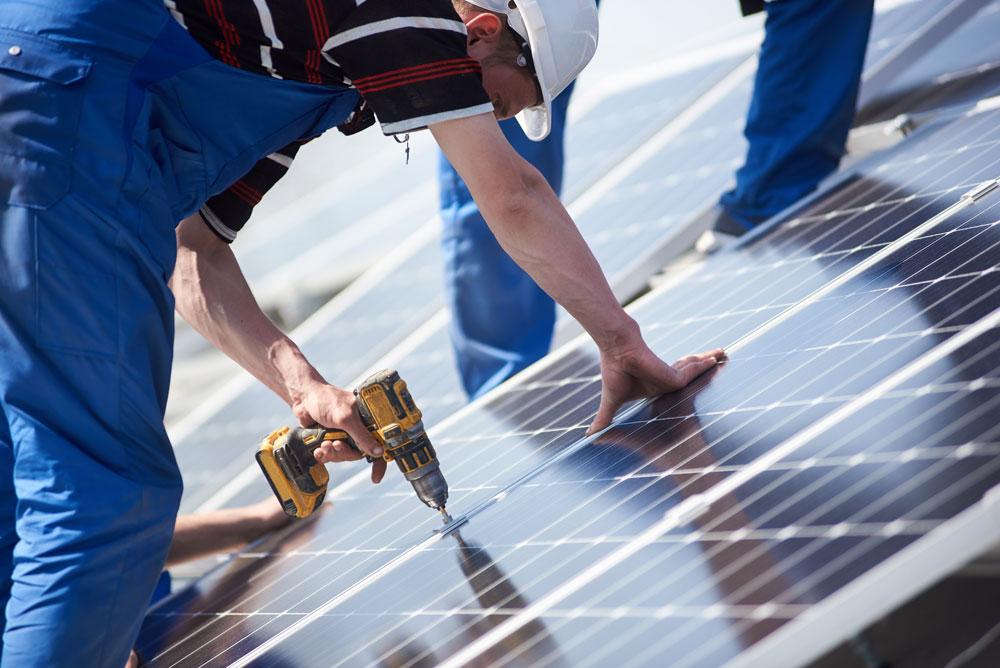
Public bodies are facing rising pressure to cut energy waste and stabilise budgets, and the surge in UK solar deployment shows why on-site generation is becoming central to that effort. 269,000 solar installations were completed in 2025, this is the highest total ever recorded in a calendar year and 37 per cent more than the year before. Around 255,000 of these were rooftop solar – meaning at least 95 per cent of all new solar was installed on homes, businesses and other buildings. This equates to a new rooftop solar installation every two minutes throughout 2025.
In March 2026, the UK surpassed two million total solar installations for the first time, across homes, communities and solar farms.
Figures from April 2026, show that nine of the ten best-performing months ever recorded occurred in the past year. There were 23,000 new installations in May, with more than half of those being rooftop solar on homes.
The data also shows that the cost of acquiring and installing solar PV has decreased by up to nine per cent.
Then energy secretary Ed Miliband said: “As we face a second fossil fuel crisis in 5 years, Britain is taking back control of their energy by generating more clean power than ever before. Record-breaking solar growth means greater energy security, lower exposure to volatile fossil fuel markets which we can’t control.
“This is what our clean power mission looks like: backing homegrown energy, giving people more control over their bills, and building a stronger, more resilient energy system for the future.”
Meanwhile, ministers have confirmed that plug-in solar panels will be available in UK shops within months, offering a low-cost, accessible route to small scale generation for organisations with limited budgets. Together, these developments signal a shift: solar is no longer just a decarbonisation tool, but a practical efficiency measure that helps public buildings reduce grid dependence, manage demand more intelligently and protect themselves from energy price shocks.
Reducing waste and managing demand
Solar is increasingly being treated not just as a clean power measure but as a practical energy efficiency tool for public buildings, helping organisations reduce waste and manage demand more intelligently. Recent government funding announcements underline this shift: in February 2026, the government announced £74 million for clean energy updates for hospitals and military sites.
The money will be split between 82 NHS Trusts, eight military sites and one prison.
The funding can be spent on adopting clean energy technologies and improving energy efficiency.
It is anticipated that the money will save 190 NHS sites £30 million a year on energy bills. Meanwhile, military sites are expected to make annual energy savings worth hundreds of thousands of pounds.
Lincoln County Hospital for example will receive over £1.2 million to install solar panels, while the Harbour, a mental health hospital in Blackpool, will benefit from £590,000 to install new battery technology.
RAF stations including RAF Lossiemouth, RAF Waddington and RAF Marham will benefit from upgrades to manage energy usage, making them cheaper to run.
£9 million will be delivered in partnership with Great British Energy (GBE) for batteries and solar panels.
Then minister for energy consumers Martin McCluskey said: “More money will go straight to frontline services as hospitals, prisons and military sites benefit from cheaper bills and cutting-edge green technology.
“This is our clean power mission in action – cutting bills, investing in public services and providing energy security for our country.”
Then health and social care secretary Wes Streeting said: “With lower bills for hospitals, better value for money, and a cleaner, more efficient NHS, everybody wins.
“Every penny of these savings will be redirected straight back into frontline care and delivering an NHS patients, staff and the whole country can be proud of again.
“This investment will help us build an NHS fit for the future.”
Alongside this, the Future Buildings Standard (2026) introduces mandatory solar PV for new non domestic buildings from 2027, embedding on-site generation directly into the UK’s energy efficiency regulations and tightening fabric standards to reduce overall consumption.
Plug-in solar for homes
Plug-in solar is emerging as a new, low-cost entry point for organisations that lack the budget or roof space for conventional PV. In March 2026, the UK government confirmed that plug-in solar panels will be legal and available in shops within months, following updated safety standards and certification rules designed to support small-scale, consumer-level generation.
Plug-in solar panels can be placed in outdoor spaces or on balconies and plugged in to a mains socket to provide energy for households. The tools could reduce the amount of electricity taken from the grid and cut energy bills.
The government is working with retailers like Lidl and Amazon, and manufacturers like EcoFlow to enable the products to be brought to the UK market.
In Germany, around half a million new devices are brought in every year.
In June, retailers including Currys, B&Q, Amazon and Lidl joined government plans to bring plug-in solar panels to UK homes.
Then minister for energy consumers Martin McCluskey discussed the topic at a roundtable of some of the biggest retailers in the country, with a combined total of almost four thousand stores.
McCluskey said: “Plug-in panels can be transformative for renters or those on lower incomes, so I welcome the conversation today with household names such as B&Q and Currys showing a huge amount of support for getting the panels in people’s homes.
“This easy to install tech can cut people’s bills and help make the UK less reliant on global fossil fuel markets.”
Georgina Hall, corporate affairs director at Lidl GB, said: “At Lidl GB, we want to make sustainable choices affordable and accessible to every household which is why we are supporting DESNZ’s latest steps toward modernising regulations for ‘plug-and-play’ technology.
“By establishing a clear, robust framework to bring plug-in solar to market safely and efficiently, it could unlock a highly effective, low-cost route for people to reduce their energy bills. We welcome this consultation and look forward to working alongside the government and industry partners to explore how these products can safely play their role in the UK’s clean energy revolution.”
Cost savings
Solar is becoming a practical way for public bodies to cut operational costs, particularly for buildings with high daytime electricity use such as offices, schools and leisure centres. Government analysis shows that rooftop solar can save households up to £480 a year by offsetting daytime grid consumption, and public sector sites with larger loads can achieve proportionally greater reductions. The Treasury’s 2026 clean energy upgrade package also highlighted that solar, when paired with efficient lighting and heat pump systems, can deliver multi-million-pound annual savings across large estates. As energy prices remain volatile, these savings are increasingly seen as a form of budget resilience: generating power on site reduces exposure to peak time tariffs, stabilises long term operating costs and helps organisations redirect funds to frontline services rather than utilities.
Digital technology
Solar is increasingly being paired with digital energy management tools to help public buildings reduce waste and align consumption with on-site generation. As more organisations install rooftop or plug-in solar, energy tech providers are reporting rapid growth in demand for smart building controls, real time monitoring platforms and battery optimisation software, allowing estates teams to shift loads, such as HVAC, lighting and EV charging, to periods when solar output is highest.
Solar is becoming a core part of how organisations manage energy, not simply how they decarbonise. Record deployment, falling costs and new plug-in technology are widening access. Government investment, from NHS sites to RAF stations, shows how solar, batteries and smart controls can deliver tangible, recurring savings and reduce pressure on frontline budgets.
With the Future Buildings Standard set to make solar mandatory on new non domestic buildings from 2027, and digital tools enabling smarter alignment between generation and demand, public bodies are moving towards a more resilient, data-driven energy model. Solar is now a practical lever for reducing waste, stabilising costs and strengthening operational resilience.