
This article from the FIA explores the critical role of Passive Fire Protection, its integration with active systems, and the regulatory standards that shape its implementation
Fire safety in modern buildings depends on a balance between active and passive fire protection systems. While active systems such as sprinklers, alarms, and extinguishers respond once a fire starts, passive fire protection (PFP) is built into the structure itself, working silently to contain fire and smoke from the moment ignition occurs.
Understanding how PFP functions and why it must operate alongside active systems is key to safeguarding lives, property, and business continuity.
What is passive fire protection?
Passive fire protection refers to the permanent fire-resistant features integrated into a building’s design. These systems require no activation or human input; instead, they are designed to delay fire spread, limit smoke movement, and protect escape routes.
A central principle of PFP is compartmentation dividing a building into fire-resistant zones. By containing fire within one area, compartmentation slows its progress, protects occupants, and makes firefighting safer and more effective. Limiting smoke movement is equally vital, as smoke inhalation remains one of the leading causes of fire-related fatalities.
Examples of passive fire protection system
Fire and smoke doors
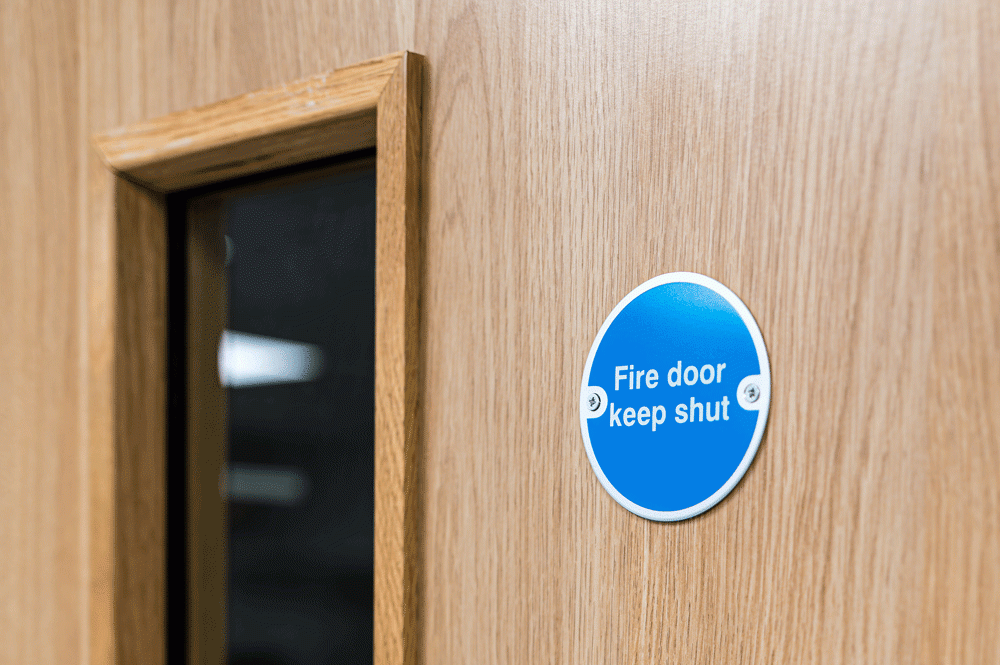
Fire doors are engineered to resist flames, smoke, and heat for a defined period typically 30, 60, or 120 minutes. When closed, they act as fire barriers; when open, they provide evacuation routes or access for emergency crews.
These doors differ from standard ones in weight, thickness, and construction, often incorporating fire-rated hinges, self-closing mechanisms, and smoke seals. The seals, usually brush, or intumescent types prevent toxic gases from leaking through gaps. Proper fitting is crucial to ensure they do not obstruct door closure.
Fire curtains
Used in open-plan areas such as theatres, shopping centres, and offices, fire curtains are deployable barriers designed to contain fire and smoke. They can operate automatically or manually, providing additional time for evacuation and firefighting. Although they move, their role in containment aligns them closely with passive protection principles.
Fire walls
Fire walls are structural barriers, often constructed from reinforced concrete or masonry, that extend from foundation to roof. Their non-combustible composition allows them to resist fire for several hours, stopping flames and heat from spreading between sections of a building or adjacent properties.
Intumescent coatings
These specialised coatings protect load-bearing steel structures. When exposed to high temperatures, they expand to form an insulating layer that slows heat transfer, helping to preserve the building’s structural integrity and delay collapse.
How passive differs from active protection
The main difference between passive and active fire protection lies in their mode of operation. Passive systems are preventive built into the structure and continuously providing protection without activation.
Active systems are reactive triggered by heat, smoke, or manual action to detect, alert, or extinguish fires.
Both are vital. Passive systems buy time by containing the fire, while active systems use that time to suppress it. Increasingly, new technologies blur the line between the two, but their interdependence remains clear: neither can function as a complete solution alone.
Implementing an effective PFP strategy
Establishing a robust PFP strategy begins with a comprehensive fire risk assessment. This identifies hazards, evaluates how a building is used, and highlights where passive systems are most needed.
A typical plan should: divide the building into fire-resistant compartments; use approved fire-resistant materials; protect the structural framework; install barriers to restrict fire and smoke spread
Attention to detail is essential. Even small gaps around pipes, ducts, cables, and electrical outlets can allow fire and smoke to pass through walls or floors. Specialist sealing materials should be used to maintain compartment integrity.
Good ventilation also plays a role, helping to clear dangerous gases and maintain safe escape routes. All PFP installations should be carried out by qualified professionals, with detailed records maintained for audits and compliance. Regular inspection and maintenance are not optional, they are legal and practical necessities to ensure systems perform as designed.
Common challenges and how to overcome them
Retrofitting in older buildings
Integrating PFP systems into existing structures can be complex and expensive. Many older buildings were constructed before modern fire safety standards, requiring structural modifications to accommodate fire-resistant materials or compartmentation barriers.
Ongoing maintenance and testing
PFP elements can degrade over time due to wear, building movement, or accidental damage. Without routine inspections, a system may fail when most needed. Installation of other services may cause damage to the fire resisting elements of the building. Controlling and monitoring of such works is important to ensure that the PFP systems has not been compromised. Establishing a planned maintenance schedule ensures early detection of issues and compliance with regulations.
Evolving regulations
Fire safety legislation is constantly evolving. The Building Safety Act 2022 and updates to the Building Regulations 2010 have reinforced the importance of competence, record-keeping, and product certification. Staying compliant requires ongoing attention and investment, particularly for complex or high-rise buildings.
Cost and resource constraints
High-quality fire-resistant materials and professional installation can be costly. However, the financial and reputational impact of inadequate fire protection is far greater. Cutting corners compromises safety and may expose building owners to legal liability.
Regulatory standards and compliance
In the UK, passive fire protection systems must comply with the Building Regulations 2010, particularly Approved Document B (Fire Safety), which governs compartmentation, escape routes, and fire resistance. E
F Materials and systems should meet British Standards such as: BS 476: Part 20–24:1987 – Fire resistance tests for building elements; BS EN 13501 – Fire classification of construction products and building elements; BS EN 1363-1:2020 – Fire resistance testing for construction products; and BS EN 1634-1:2014 – Testing for fire doors and shutters.
Ensuring compliance not only protects occupants but also supports insurance coverage and legal defensibility. Documentation such as fire stopping certificates, installation records, and inspection logs forms part of the Golden Thread of information required under the Building Safety Act.
Why integration matters
Neither active nor passive fire protection can function effectively in isolation. Passive systems contain the fire, while active systems detect and suppress it. Together, they provide a layered defence strategy that protects life safety, preserves property, and enables business continuity after an incident.
For designers, facilities managers, and responsible persons, the goal should always be integration, ensuring that both systems complement one another through coordinated design, installation, and maintenance.
Conclusion
Passive fire protection forms the structural backbone of building fire safety. Through fire-resistant walls, doors, coatings, and compartmentation, it restricts fire and smoke spread, maintains structural stability, and preserves vital escape routes.
When combined with active systems such as alarms and sprinklers, PFP enables a comprehensive approach that not only meets regulatory requirements but also saves lives and limits damage.
In the words of many fire safety professionals: active systems fight fire, passive systems buy time. Both are indispensable, and together they define the resilience of the built environment.