
As winter approaches and seasonal illnesses surge, public buildings face heightened hygiene challenges. David Garcia, chair of the British Cleaning Council, highlights how councils are adapting cleaning protocols to combat infection risks, and introduces a new national framework aimed at raising standards and safeguarding public health
As we move through autumn towards winter, local authority services responsible for cleaning public buildings are gearing up for the particular challenges the change in seasons brings.
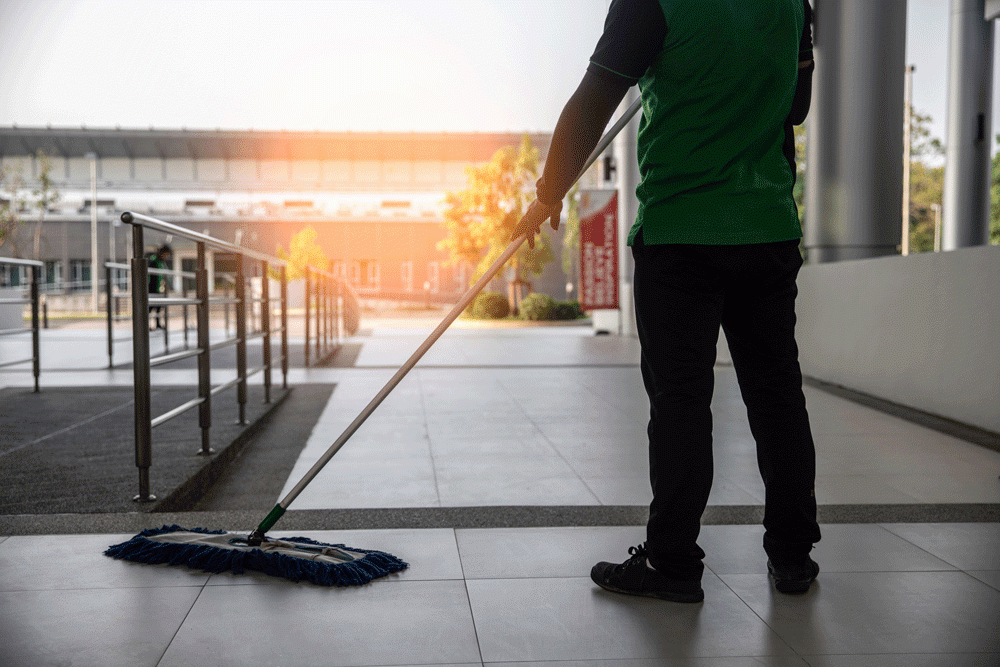
Large numbers of visitors interact in a wide range of buildings in the public sector, such as libraries, leisure centres, community centres, council offices and transport interchanges, making cleaning them a major issue.
A survey of local authorities conducted by the Association for Public Service Excellence (APSE) shows that cleaning teams responsible for public buildings implement a number of changes to the way they work around this time of the year.
Of councils responding: 45.45 per cent said they changed cleaning specifications to increase the focus on touch point cleaning; 36.36 per cent increased attention to infection control cleaning; and 27.27 per cent carry out additional deep cleans of premises.
These changes have a significant resource implication for many councils. APSE reports that a third of councils faced cost increases for cleaning materials, while 41.67 per cent found staffing costs increasing.
Winter conditions
Increased cleaning is needed due to snowy, wet and muddy conditions causing visitors to trail more dirt into buildings, and wet surfaces causing slip hazards. However, over 44 per cent of councils responding to the APSE survey cited infection control as another key factor for service changes.
In recent years, the UK has seen flu, colds and COVID-19 cases soaring in the colder months, with RSV and norovirus also in the mix.
In 2024, for example, it was estimated that there were 8,000 flu-related deaths in the previous two winters.
Making sure surfaces in public buildings are not contaminated is vitally important. The flu virus, for example, spread by coughs and sneezes, can land on surfaces and survive for up to 24 hours, where it will then be touched by and infect someone else.
Valued workforce
Cleaning operatives play a vital, frontline role in reducing the impact of the spread of infections and in keeping the public safe, well and healthy.
The APSE survey provides a snapshot of the important work that they undertake, and it is critical that this vital work is highlighted.
We at the BCC firmly believe that the introduction of clear and effective cleaning standards across public spaces, as well as in workplaces, combined with handwashing measures, is the best way to reduce the spread of common infections such as flu and protect against another pandemic.
We have just published our Strategic Framework For Achieving Cleanliness And Hygiene in Public Environments, which is designed to build on the recently-released World Health Organisation’s (WHO) Guidelines on Hand Hygiene in Community Settings.
The aim of the guidance framework is to enable managers across a range of environments to develop a policy for delivering targeted hygiene which is appropriate to the specific needs and challenges of the environment they are responsible for, and which includes both cleaning and the subsequent measurement of outcomes.
Improved hand washing nationally will undoubtedly help limit the spread of sickness, but that needs to be combined with higher cleaning standards to be most effective.
The Strategic Framework For Achieving Cleanliness And Hygiene in Public Environments we have issued gives expert guidance on the issues and methods to be considered when designing a cleaning regime in order to create a cleaner, safer, and healthier environment for everyone.
Higher cleaning standards are essential to protect public health, save lives and reduce the huge impact of sickness absences on the economy.
For a free copy of the Strategic Framework For Achieving Cleanliness And Hygiene in Public Environments, please email the BCC via Compsec@britishcleaningcouncil.org