

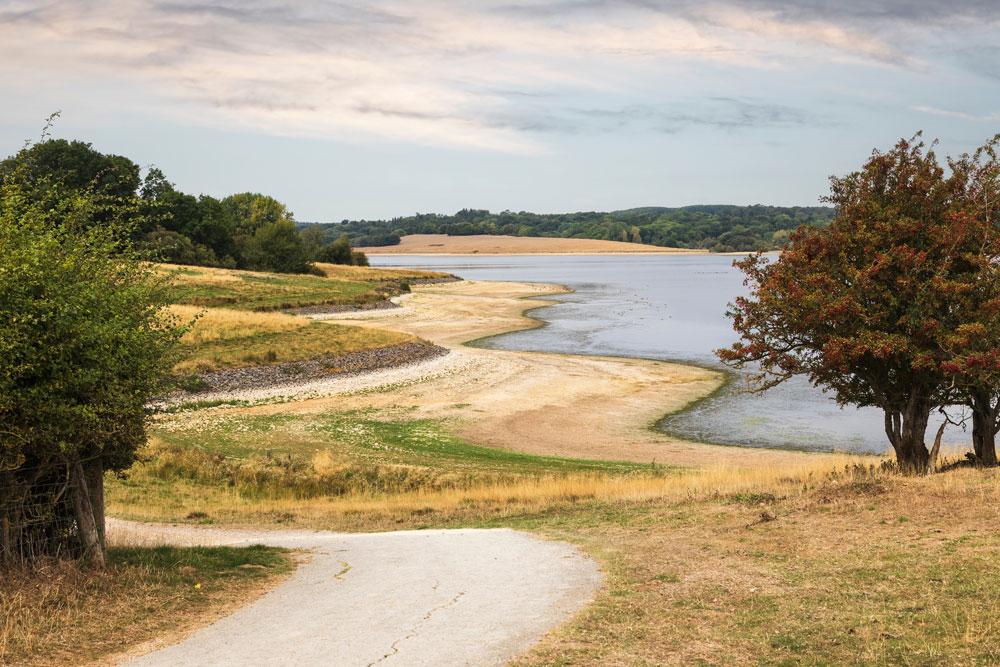
The Environment Agency has declared that half of England is now in drought.
Seven areas of England are now officially in drought after record low rainfall and high temperatures.
A large area of central, eastern and southern England is experiencing a flash drought, caused by a combination of very low rainfall and higher temperatures.
East Anglia, Hertfordshire and the whole of London, Thames Valley, Hampshire & the Isle of Wight, Devon & Cornwall, The West Midlands and Wessex (covering Dorset, Somerset, Wiltshire, and south Gloucestershire) are now in drought.
The Environment Agency has boosted its response, with enhanced monitoring and controlling how much water can be taken from rivers and groundwaters.
Representatives from the National Drought Group - which includes the Met Office, government, regulators, water companies, farmers, Canal & River Trust, anglers and conservation experts – held a dedicated drought briefing yesterday (Tuesday 28th July) with Water Minister, Emma Hardy on Tuesday.
The group reviewed impacts, preparedness, and drought response actions across England. Water companies were told to prioritise fixing leaks.
Helen Wakeham, Director of Water at the Environment Agency and Chair of the National Drought Group, said: "The hot and dry weather means we are currently using water faster than nature can replenish it.
"A second consecutive summer drought is an exceptionally serious situation and one that will have long-lasting impacts on our environment, wildlife, and the economy.
"We want everyone to stay safe and hydrated during the hot weather but every drop we can save is a drop more for nature and agriculture."
July has had just 7 per cent of expected rainfall, and only 1 per cent across southern England. No substantial rainfall is forecast.
Water Minister Emma Hardy said: "Our climate is changing, droughts are becoming increasingly common, and we need to be prepared for this new normal.
"We’re delivering long-term change in the water industry and driving record investments in infrastructure, including nine new reservoirs.
"We expect water companies to follow their drought plans, to go further and faster to reduce leaks, and to ensure supplies are not disrupted even in the driest of weather."
Met Office Chief Meteorologist, Will Lang, said: "The warm and exceptionally dry conditions experienced across much of England over recent months are continuing to have a significant impact. Many areas have received very little or no rainfall throughout July, extending a period of below-average rainfall that has persisted across parts of the country since spring.
"While there are indications of occasional unsettled spells during the first part of August, bringing the chance of rain to some locations, there is currently little sign of the widespread, sustained rainfall that would be needed to make a significant difference to the areas most affected by the dry weather.
"The Met Office continues to work closely with the Environment Agency and partners across the water sector, providing expert meteorological information and forecasts to support drought monitoring, planning and response activities."