
In this article, Saeed Ahmadi from the IOSH Advice & Practice team explores how rethinking Work at Height safety, from hazard identification and legal duties to collective and personal protection, can save lives, reduce risk, and embed a culture of prevention across industries
Working At Height (WAH), remains one of the most significant hazards across many industries. Despite regulations and awareness around WAH safety, falls from height continue to cause serious injuries and fatalities worldwide. To put it in perspective, the World Health Organization (WHO) estimates around 684,000 fatal falls occur each year, making them the second leading cause of unintentional injury and death after road traffic accidents. In the UK, the Health and Safety Executive (HSE) reports that falls from height remain the leading cause of fatal workplace injuries, accounting for 35 of 124 work-related deaths between April 2024 and March 2025.
WAH includes any task where a fall could cause injury – from ladders, roofs, fragile surfaces, floor openings, elevated platforms, or near open tanks and hoppers. Given the frequency and severity of falls from height, understanding unique hazards during a WAH activity, assessing and managing the risks involved, and implementing effective prevention measures is essential. Every fall is preventable through proper planning, safe systems of work, suitable WAH equipment, and training.
Hidden and obvious hazards at height
When it comes to working at height, hazards take many forms but share one thing: the potential for a fall and its serious consequences. The level of risk depends on factors such as the fall distance, landing surface, and any effective mitigative measures put in place, such as: safety nets, soft landing systems and safety harnesses coupled with energy absorbers to prevent workers hitting objects or the ground below (fall arrest).
Ladders, which are among the most commonly used equipment, present significant risk. Damaged steps, faulty structures, or exceeding the Safe Working Load (SWL) can turn a routine job into a major fall incident. In fact, ladder-related accidents account for more than a quarter of all workplace falls. Even a sturdy ladder becomes hazardous if poorly positioned. Placing it on an unstable surface or at the wrong angle can cause it to slip.
Following the HSE’s “1-in-4 rule” – that’s setting the base one metre out for every four metres in height – greatly improves stability.
Fragile surfaces are also serious hazards during WAH activities. Roofs and platforms may appear solid but can collapse without warning if not properly assessed. Overhead power lines and electrical installations add more hidden hazards. Access platforms can bring workers dangerously close to live cables, creating electrocution or radiation risks that require strict planning and keen awareness.
Those who are below are equally at risk. Falling tools, materials, or debris can cause severe injuries. Poor storage, careless handling, and missing Toe Boards on scaffolds are frequent contributing factors. Recognising the unique hazards during a WAH task is the first step to ensuring everyone’s safety – both at height and on the ground.
What the law requires for safe WAH activity
In the UK, the law requires employers to conduct risk assessments and identify measures required to ensure that work at height is carried out safely.
The Work at Height Regulations 2005 set out the hierarchy of controls: avoid working at height where you can (e.g. use extendable tools from ground level); prevent falls with collective protection like well-designed scaffolds, guardrails and edge protection if work must be carried out at height; and minimise the distance and consequences of a fall (e.g. safety nets, airbags or personal fall protection).
When choosing control measures, always prioritise collective protection (scaffolds, guardrails, nets etc) before relying on personal protection. The chosen control measures must be proportionate to the risk and suitable for the specific task.
Managing the risks stemming from WAH activity
Because of the risk of a fall and potential for serious injury from WAH, measures should be taken to protect workers at every stage, considering the range of hazards to which they might be exposed. Measures to avoid or reduce the risk must be taken based on a risk assessment, and generic measures may not be sufficient for specific WAH tasks.
Designing out the hazard: avoid WAH wherever possible
When managing the risk of WAH, the safest option is to avoid it wherever possible. Duty holders, occupational safety and health professionals, and work planners should start by identifying WAH hazards, understanding tasks, and assessing site layout, activity type, and access points to see if height work can be eliminated or reduced. For example, roof components can be assembled at ground level and lifted into place by crane, allowing safer, faster final assembly. Prefabrication in workshops can also cut time spent at height. However, factors like quality control, site space, traffic, cranes’ lifting capacity, and transport risks should be considered. Even routine tasks like window cleaning or storage handling can often be done from the ground using extendable tools. With careful planning and creative thinking, many height-related tasks can be made safer and more efficient.
Collective protection: building barriers between people and risk
The next step, following the risk hierarchy, is to assess the feasibility of using collective fall protection to prevent access to edges or fragile surfaces such as roof lights, weak roof coverings, or poorly supported slabs. Ground conditions (uneven or crowded areas), physical demands on workers, and weather or environmental factors should also be reviewed.For example, when installing large metal roof panels on a sloped industrial roof, collective protection must be prioritised from the outset. Safety nets compliant with BS EN 1263-1/2 can be installed below the roof to safeguard both roof workers and ground activities. As work progresses, temporary edge protection compliant with BS EN 13374 should be added along eaves and verges. Where direct edge protection isn’t possible, bracket-supported nets, guarded platforms, or intercepting scaffolds (falsework) can provide barriers. For smaller or short-duration tasks, Mobile Access Towers (MATs) or Mobile Elevating Work Platforms (MEWPs) with guardrails offer safe, flexible access on stable ground.
Personal fall protection: the last line of defence
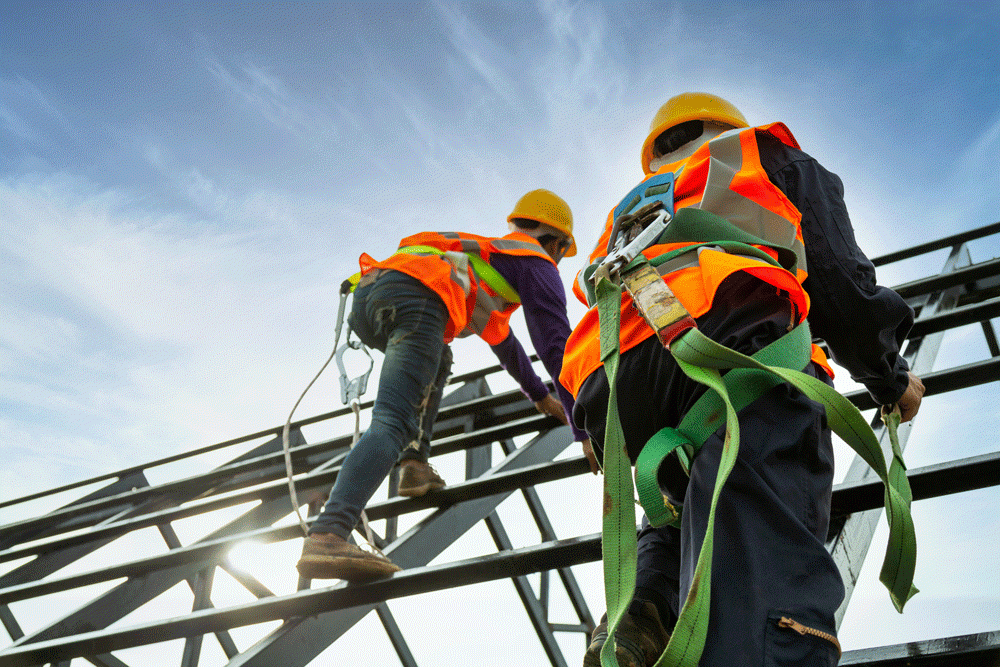
When WAH cannot be done safely from the ground, and collective protection such as guardrails or nets is impractical, personal fall protection must be used. In these cases, personal protective equipment (PPE), such as full-body harness, provides a vital line of defence, but its effectiveness depends on the worker’s competence, awareness, and fitness. Even with PPE, falls can cause serious injuries such as suspension trauma (harness hang syndrome), which can quickly lead to unconsciousness or death if rescue is delayed.
A common example is maintenance on
latticed steel transmission towers (pylons), where workers use full-body harnesses with twin-tailed lanyards, ensuring one secure attachment point is always maintained above them. Rope access systems, using both a working and safety line, are increasingly preferred following IRATA (Industrial Rope Access Trade Association) guidance. When installing ropes or working near live components, twin-tailed lanyards remain essential, and circuits may need isolating.
Final word: falls are preventable
WAH demands more than legal compliance – it requires a deliberate commitment to planning, design integrity, and human competence. Every task should begin with expert consultation and risk-based planning to eliminate or control WAH risks like falls or dropped objects. Prioritising inherently safe design principles to design out WAH risks is essential. However, even the best plans are only effective if executed by competent people. Competence must be visible and verified: skills, training, and experience are documented, with only the right personnel and equipment assigned to WAH tasks. Equipment and systems must also be flawless: every harness, anchor point, and tool must meet the highest standards, be inspected regularly, and removed from service at any sign of doubt.
Finally, WAH safety is not complete without emergency response readiness. Rescue and medical response procedures must be rehearsed with the same seriousness as the work itself, as preparation can be the difference between recovery and tragedy.